 RotorLab
The system of record for your drone program. Every flight, repair, sign-off, and authorization lands on the aircraft that earned it, tamper-evident and audit-ready. When the regulator, the insurer, or the auditor asks, you send a document with a verification code. Not a spreadsheet. Not a search. Not a shrug.
Students design on a validated engine and log real flights. Accreditation reviews ask for the record. So do parents.
Engineering programs → Design and engineeringFreeze a type. Every serial ships with a signed dossier. When a buyer or a prime asks how you know it conforms, show them. Do not argue.
Design teams and manufacturers → OperationsDispatch, currency, authorizations, and occurrences on one board. The insurer's first call after an incident is about currency. Answer in minutes.
Fleet operators → MaintenanceComponent life and battery health, counted from the flights. A part's history leaves with the technician unless it lives in the record.
Maintenance records →Most programs start with a blank binder and a deadline. Yours starts with a working program and a readiness score that tells you, today, what an inspector would find.
A hazard library, a training skeleton, and a full manual outline are there the day you arrive. Reshape, do not invent.
The setup guide checks itself off from your records. Readiness rolls the program into one honest number that never gates a flight.
Every filing moment ends in a verifiable PDF. The audit binder assembles all of them in one motion, each with its hash.
Claims get denied. Contracts get lost. Programs get grounded. Rarely because a flight was unsafe. Usually because the record did not exist before the question, and one typed up afterward convinces nobody. Three people will eventually ask. Every document RotorLab issues carries a code they can check themselves at rotorlab.app/verify.
Days, not months. Which aircraft flew under which authorization, with which pilot, under which manual revision. Spreadsheet operations spend those days reconstructing. You press Export.
The claim rides on the answer. Currency, component hours, and the last person to touch the aircraft, from records written before the incident, not after it.
If it lives in someone's memory, it leaves when they do. Readiness, registers, the approved manual, and every dossier in one binder, with a manifest that names what is missing.
Fleet software starts logging at takeoff. RotorLab starts at design, so the physics, the flights, and the maintenance are one story. You build the aircraft. We prove the numbers.
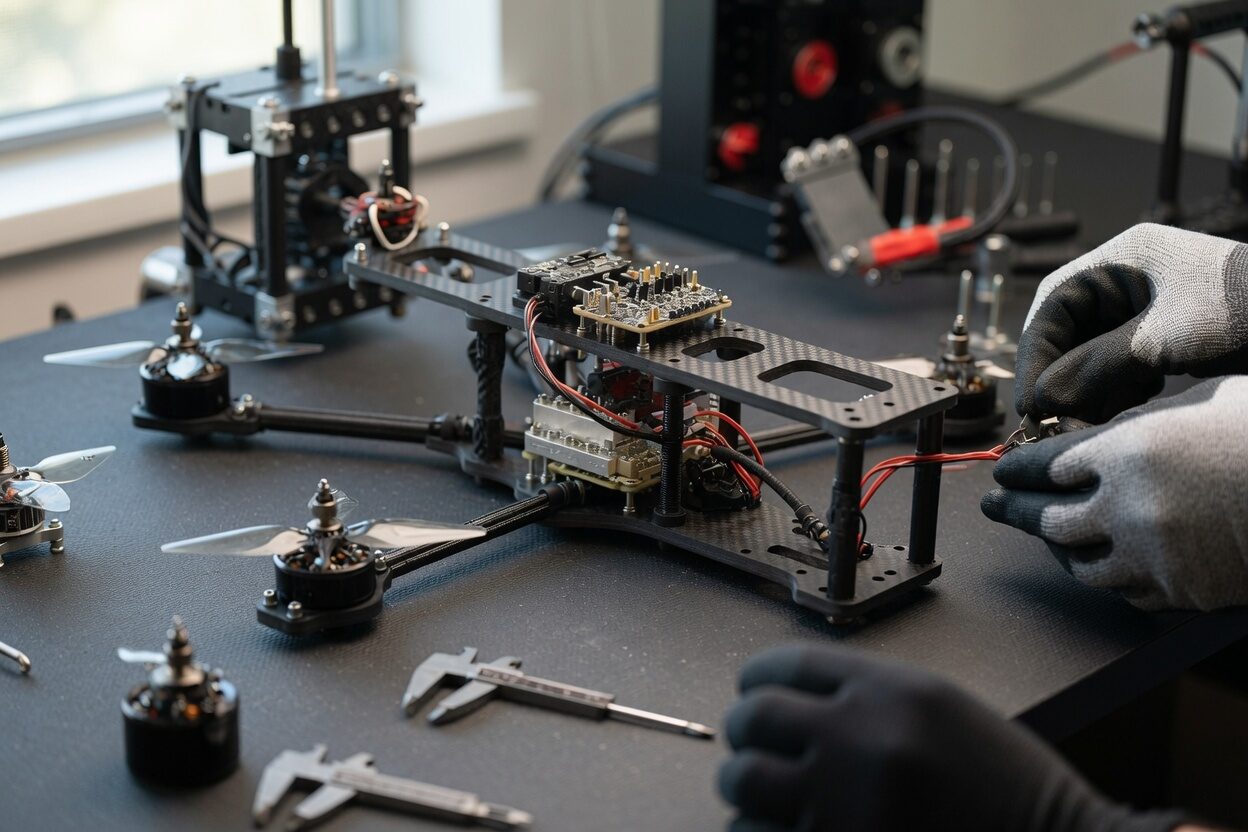
A calibrated model of your actual aircraft: hover from momentum theory, tuned from its own telemetry. Trade studies, balance, and RF range on the same build, before you cut carbon.
Check the math →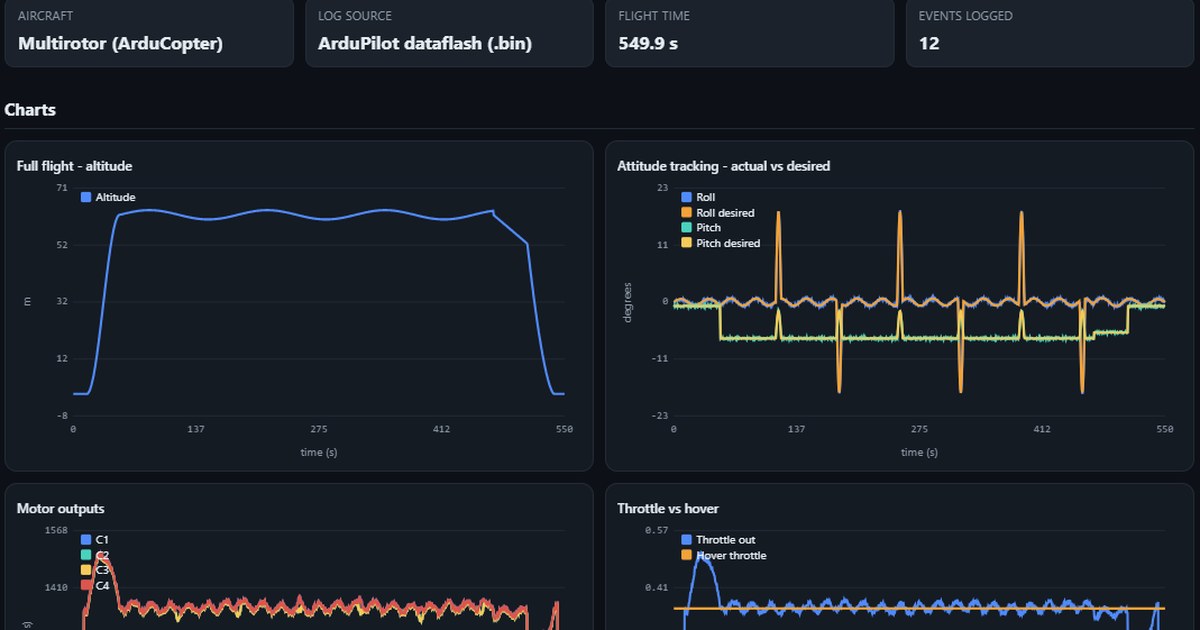
Seventy-two data points land on the aircraft that flew. Modes, battery, vibration, GPS, and the seconds before a crash.
Read a log free →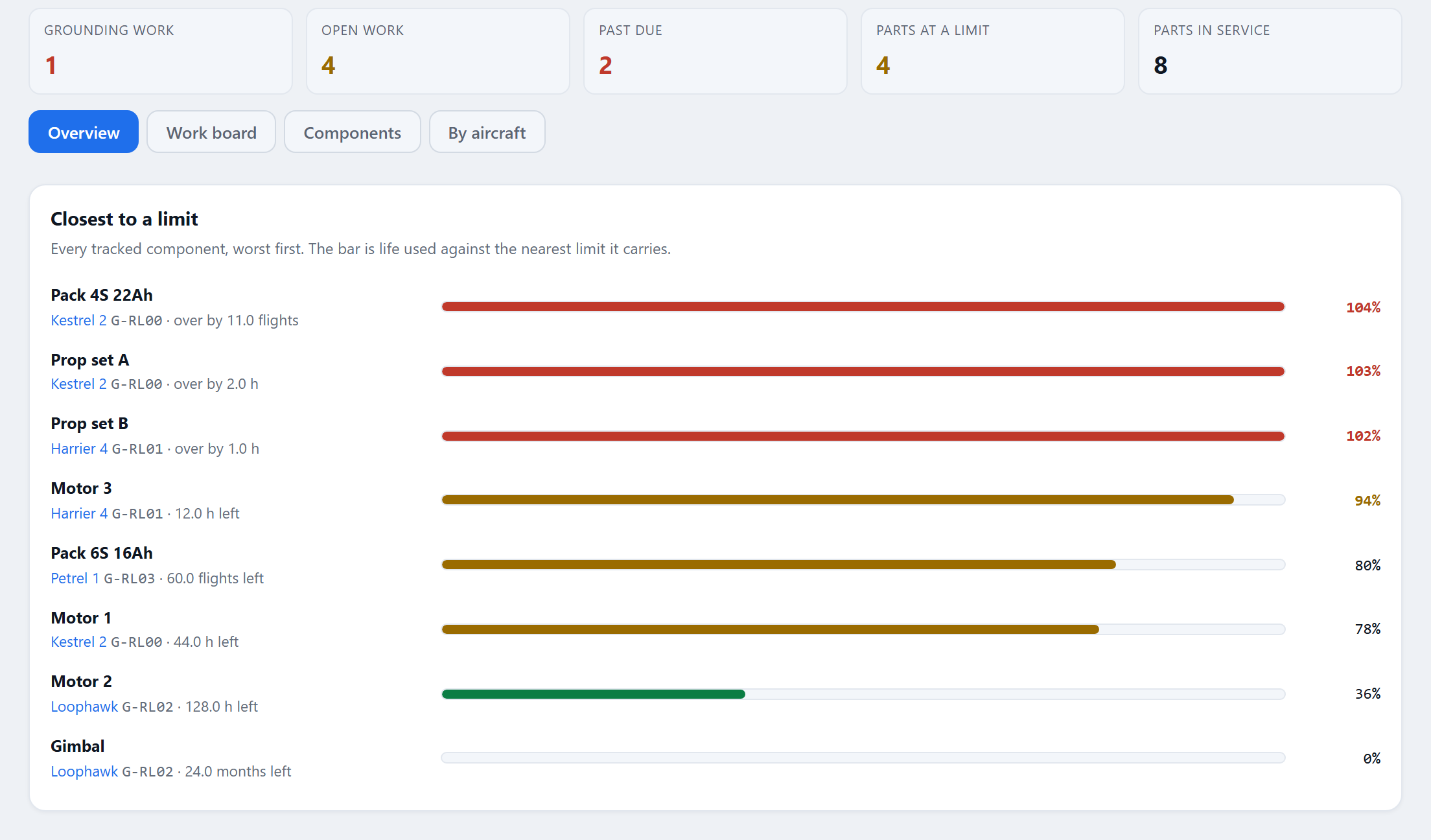
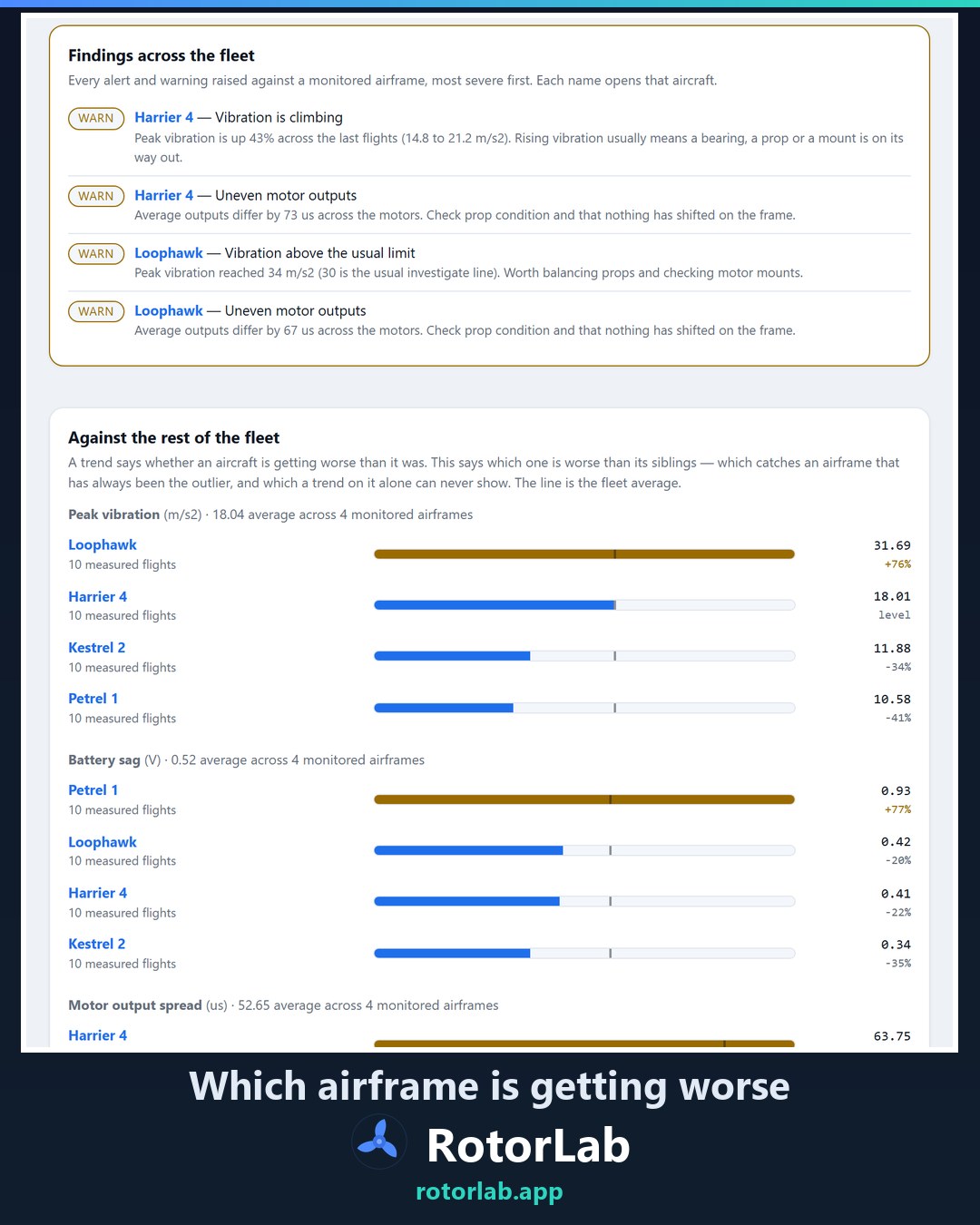
Component life, battery health, and fleet trends, never typed in. A part's history follows it to the next airframe.
Fleet health →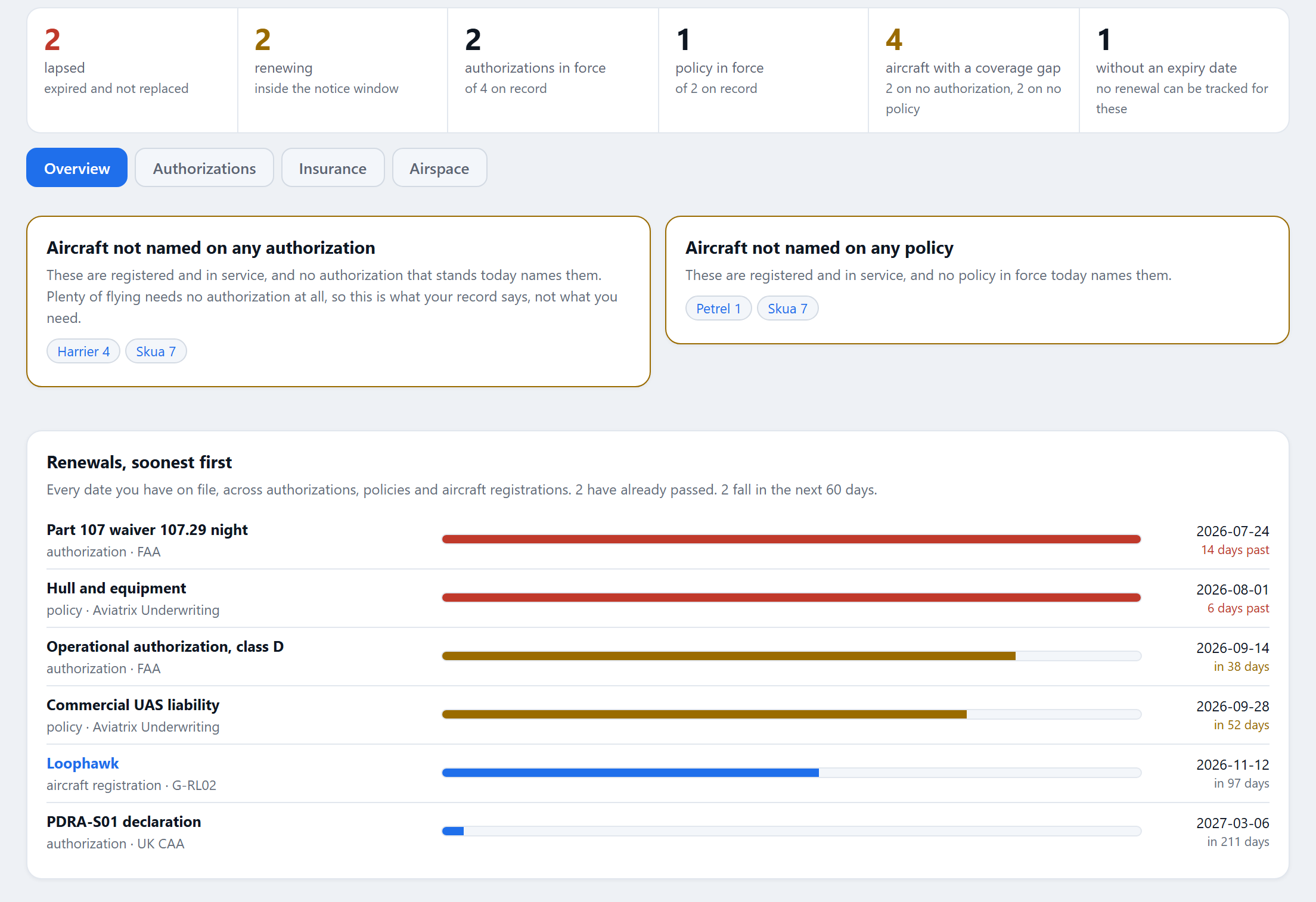
Manual, coverage, binder, portal. Each one issued with a verification code.
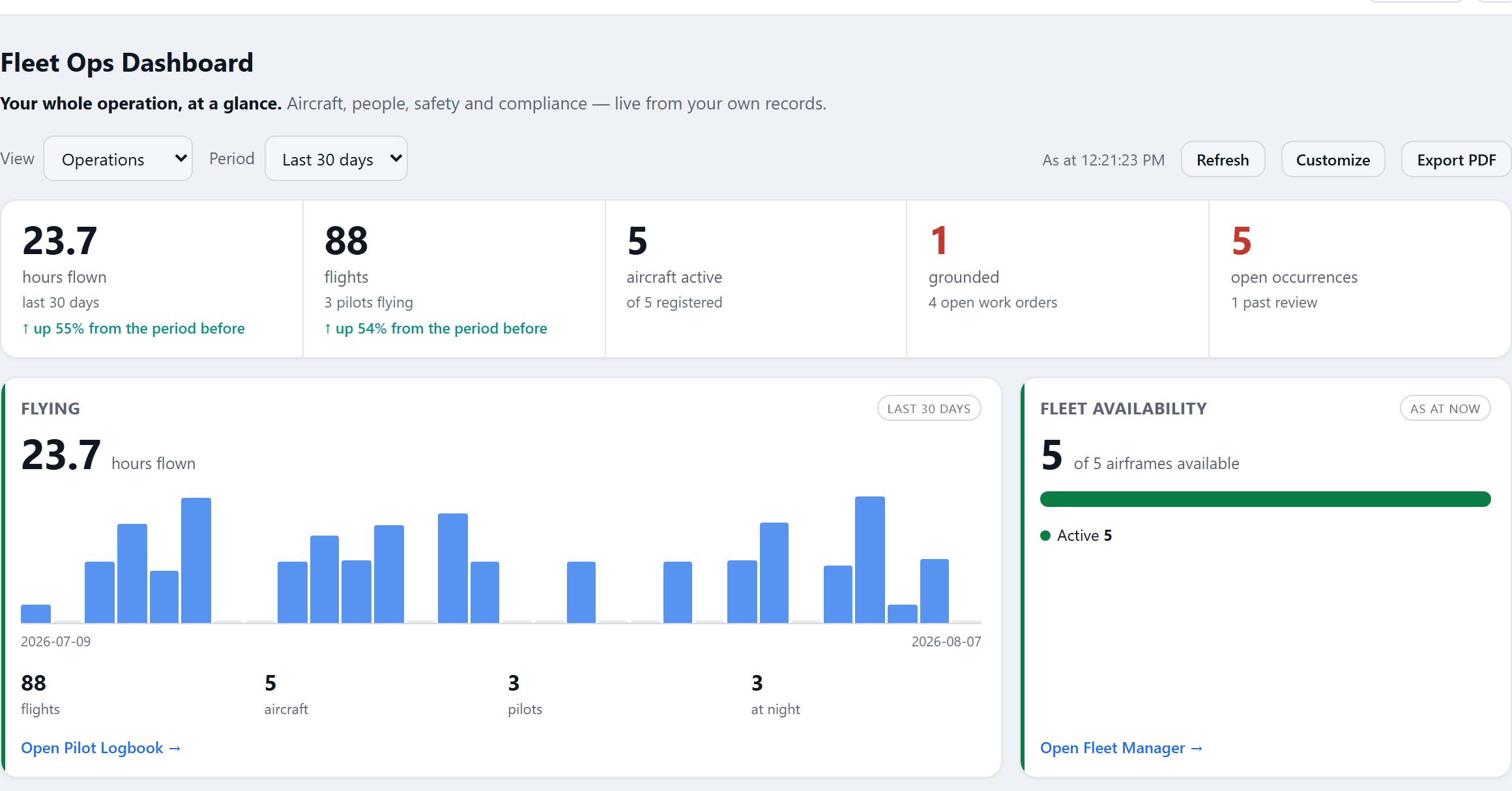
The paperwork →The Fleet Ops Dashboard reads your own records and puts the answer first. Included with every plan.
One account, one audit trail, eleven regulatory frameworks. File each flight under the rules it was flown under.
Airliners have had condition monitoring for decades. Your aircraft already log every flight in more detail than they do. RotorLab's anomaly detection listens to all of it and flags the flight that does not look like the last hundred.
Real-time situational awareness on your own network, and a chain of custody from takeoff to the binder. Your ground station talks to a Fleet Server you host. It feeds ATAK live, records every flight hash-chained, and files it to RotorLab when the aircraft lands. Nothing else touches the internet.
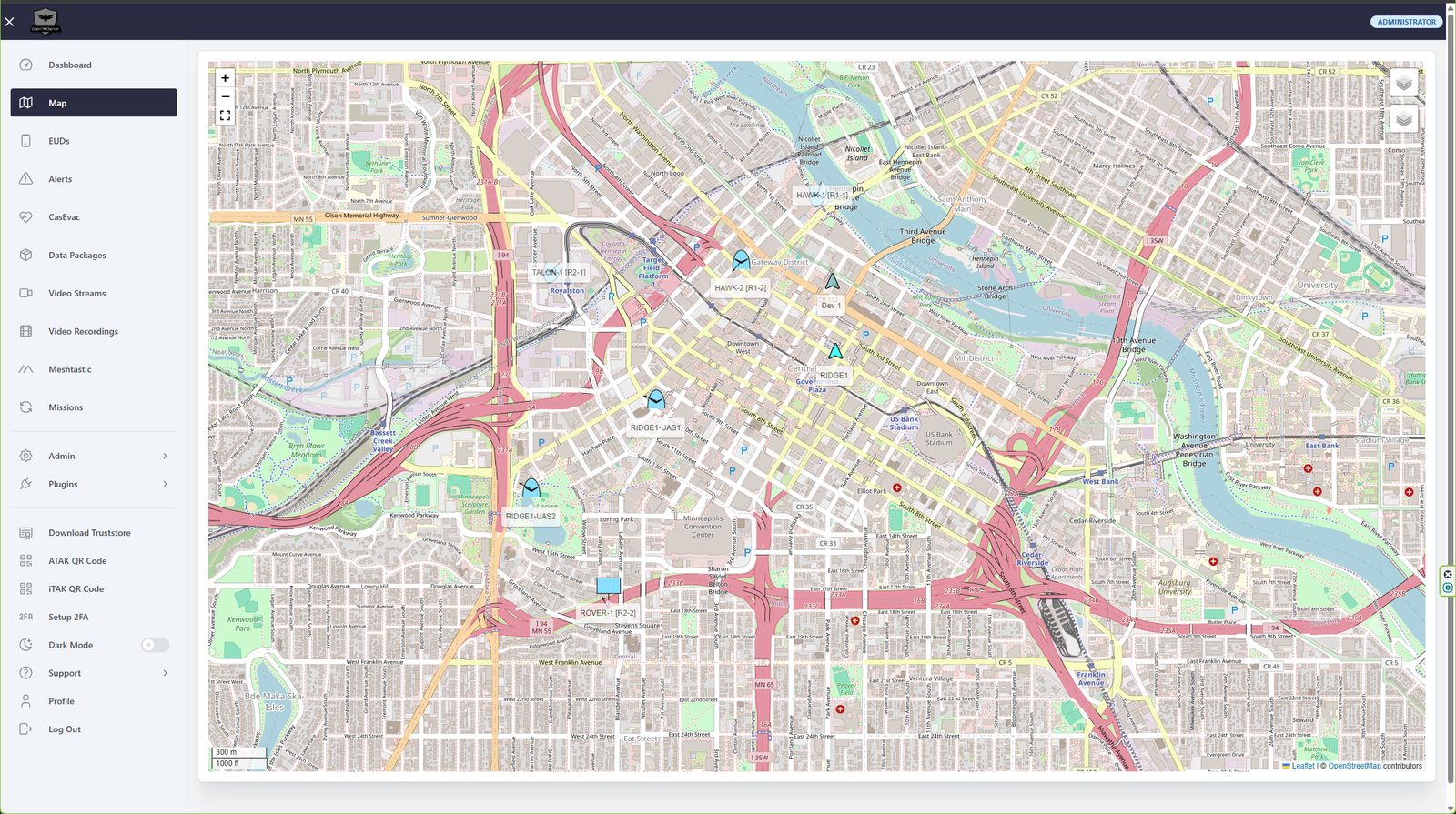
MAVLink in, live ATAK tracks out, finished flights filed to RotorLab. Files hash-chained.
Fleet Server → Any ground stationEvery aircraft becomes a MIL-STD-2525 track. A map marker sends GOTO, RTL, LAND, or HOLD.
The Bridge → In the fieldA ground station that speaks to the Fleet Server and files checklists, crew, and flights itself.
RotorLab GC →Twelve modules, one record. Every figure is calculated from your own flights and names the flights it came from, so nothing on a report is a number somebody remembered.
Procurement questionnaires and insurance renewals now ask it. A shrug loses the bid. The UAS Security Verification Standard is open, vendor-neutral, and free to read, and RotorLab measures the logs you already store against it.
A dated conformance claim naming every aircraft and every check.
Disabled failsafes, a geofence switched off, firmware with a published vulnerability. Worst first.
Every finding cites the parameter it was decided on. Unknown is reported as not assessed.
Formats are identified from the file's bytes, not its name. Figures come from the published validation run.
| Logs read | ArduPilot .bin and .log, MAVLink .tlog, PX4 .ulg, Betaflight / INAV / EmuFlight Blackbox .bbl, DJI .txt (including encrypted), Parrot and GUTMA .json, Litchi / Airdata / DJI GO CSV. Format notes |
|---|---|
| Autopilots | ArduPilot Copter, Plane, Rover, and Sub. PX4 multirotor, fixed wing, and VTOL. Betaflight and INAV. DJI and Parrot. Multirotor, fixed wing, quadplane, tiltrotor, tailsitter, helicopter, and ground vehicles are recognized from the log. |
| Validation | 2,033 public logs, 125.6 flight hours. 100% format detection, 99.8% analyzed, 0 time-outs, 0 unhandled errors. Simulator flights with planted faults score every diagnostic. Evidence |
| Records | Aircraft, types, serials, flights, pilots, currency, authorizations, insurance, maintenance, components, battery packs, occurrences, operating areas, clients, jobs, dispatch, training, hazards, and the operations manual. |
| Documents | Pilot logbook, performance report, design dossier, area dossier, manual revisions, occurrence reports, audit binder, and public transparency portal. Every PDF carries a code checkable at /verify. |
| Jurisdictions | Paperwork packs for 11 jurisdictions. RotorLab records what you declare and does not interpret anyone's obligations. Coverage |
| Integration | HTTP API with OpenAPI and Postman. MCP server for AI assistants. Ground-station keys. Fleet Server and ATAK. MAVLink Bridge. RotorLab GC. Developers |
| Data | Hosted in the United States: data center in Texas, backups in Iowa. In-country hosting for most jurisdictions, or on premises with the Fleet Server. Private to your account, no third-party AI, full JSON and CSV export at any time. Trust · Status |
Each one reads the same build you are working on. Each link opens its guide.
Built for AI agents. The MCP server gives Claude, ChatGPT, or any MCP client read access to your fleet, so the question you would have asked a spreadsheet gets answered in a sentence, with the record it came from. RotorLab runs no third-party AI of its own.
Connect an assistantFleet seats are priced per aircraft. Every plan includes the physics engine, the build library, and the reports. Prices come from the live plan table. Compare it with one afternoon of reconstructing records for an auditor.
Need a purchase order or more than fifty seats? Request a quote. Have an account? Sign in.
RotorLab Racing is Iowa's only chartered MultiGP chapter. Every tool on this page started as a question asked at a track, and the software is tested every weekend by pilots with no reason to be polite about it.
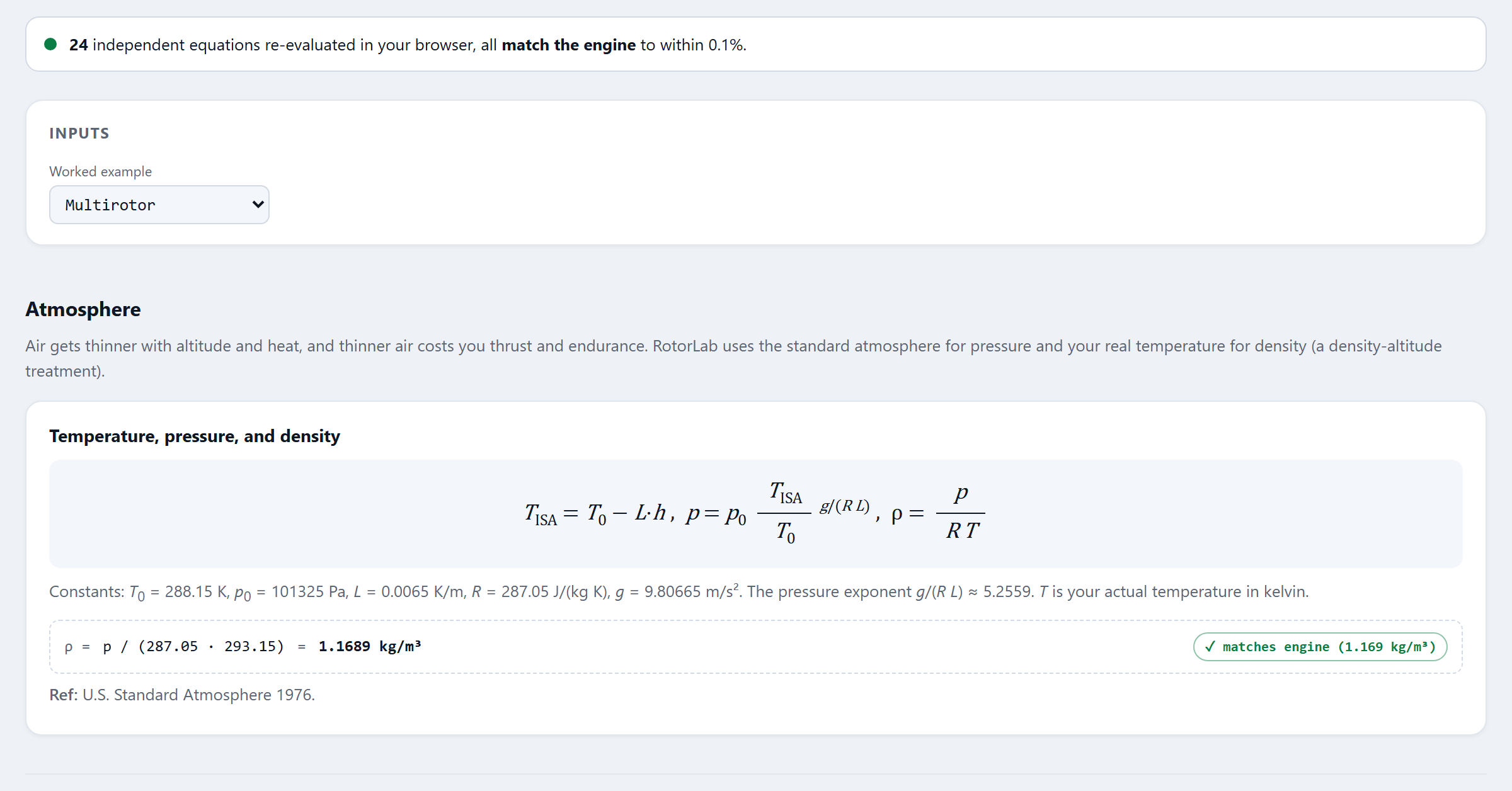
Every equation is written out and re-derived in your browser, to 0.1%.
Math and validation → 022,033 real flight logs and a fault-injection simulator, results published with every run.
Evidence → 03An open standard anyone can read, dispute, and hold us to.
Read the standard →A subscription to drone compliance software that keeps one verifiable record per aircraft, from design through every flight, repair, and sign-off, so the paperwork exists before anyone asks. Plans start at $29 a month. The Log Analyzer is free.
Yes. Start at the flight record. Maintenance, currency, authorizations, and the audit binder work the same for a bought DJI as for a built airframe. The design step is there for the day you build or modify one.
In the United States, in your private account. Our data center is in Texas, with backups in Iowa. International customers can be hosted inside their own country in most jurisdictions, or keep everything on premises with the Fleet Server. RotorLab runs no third-party AI, and the machine learning inside trains on your fleet alone. Exports are self-contained, and every issued document can be checked without an account.
Yes. The Log Analyzer is free and open to anyone. Drop in a .bin, .tlog, .ulg, or .bbl and read it now. Your file is never stored.
Fourteen days. Every feature on. No card. Bring your real aircraft, pilots, and flights; a trial full of your own data is the only honest demo.
Flight physics, fleet operations and what shipped — written for people who fly. No spam, unsubscribe in one click.